Bespoke was normal. Hand planes were the method.
Carl learned the trade from his father, back when a piece was made because someone needed it — not because a factory had extras. His first build was a cedar chest to hold his comic books. Today he still chooses every board by grain and feel, turning rough stock into objects that last generations.
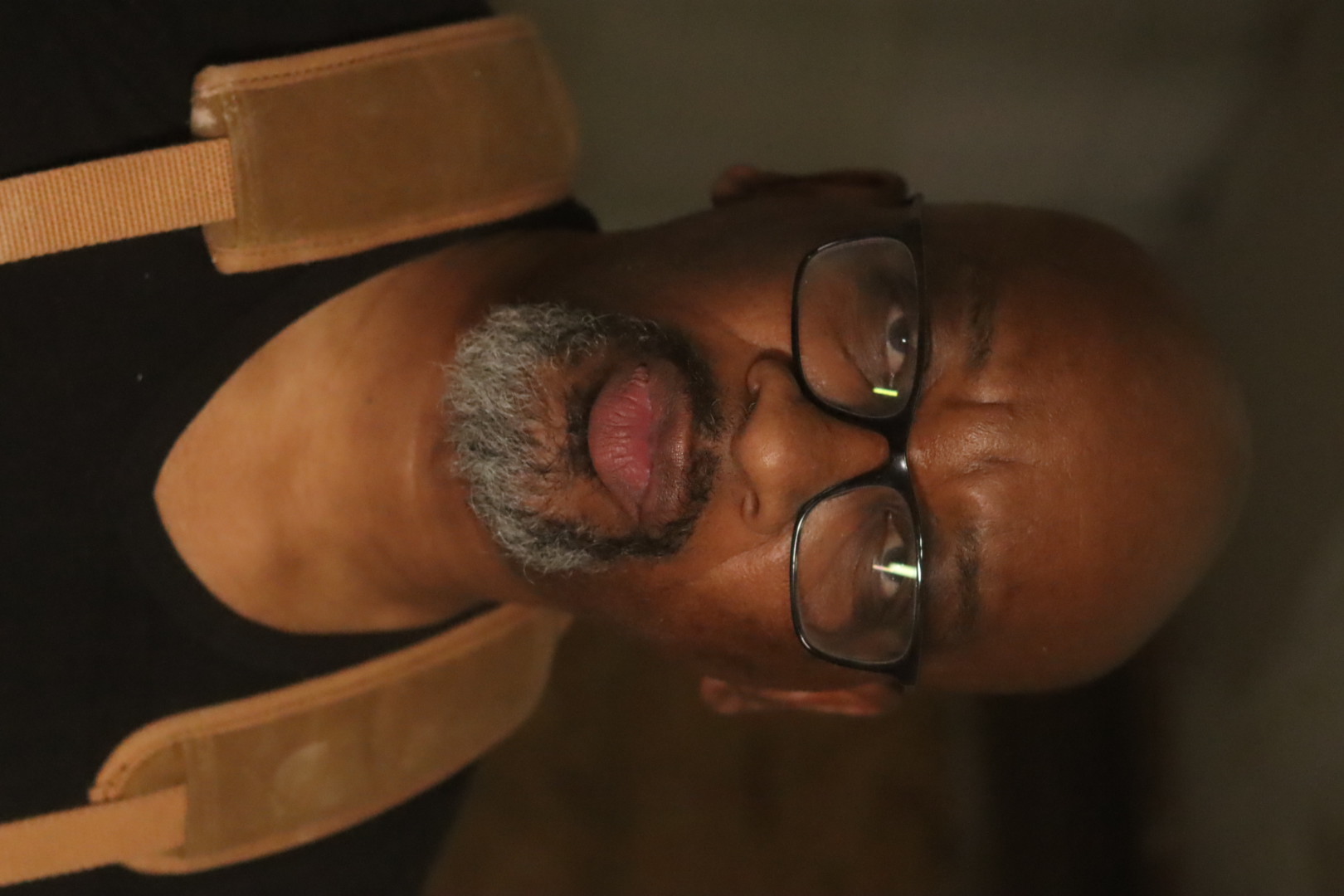
East Palo Alto roots, Atlanta bench.
Carl grew up in East Palo Alto, California, in a place where making things with your hands was just what people did. His father put a plane in his hands early, and the first thing Carl built on his own was a cedar chest for his comic book collection. He was a Star Trek fan too — always drawn to the future, even while learning the oldest way to shape wood.
In high school he stayed in the woodshop all four years: band saw, lathe, even metal working. After graduation he served in the United States Marine Corps, where discipline meant something different than it does on the bench — but the standard was the same. He never lost the passion.
The golden age of hip hop, the ’96 Atlanta Olympics, new jack swing on the radio — Carl knows that vibe. It is the same energy that runs through the shop now: old school craft, new school city, built by hand.
Back to AboutTools that outlast trends.
Hand plane
Before sandpaper took over, a sharp plane was how a board became glass. Carl still starts there — reading the grain, taking light passes, letting the wood tell him when it is ready.
Band saw & lathe
Four years of high school shop taught him the curve of the band saw and the spin of the lathe. Those machines became extensions of the same hand that learned the plane first.
Metal work
Brass, copper and steel are not afterthoughts. Carl studied metal too, so the hardware on a box or tray carries the same weight and patience as the wood it holds.
Marine discipline
The Corps did not teach him joinery, but it taught him precision under pressure. Every right angle in the shop is a quiet echo of that standard.
The work is in the doing.
These are not staged shots. This is Carl in the middle of the cut, the glue-up, the finish and the final fit — the same way he has worked since that first cedar chest.
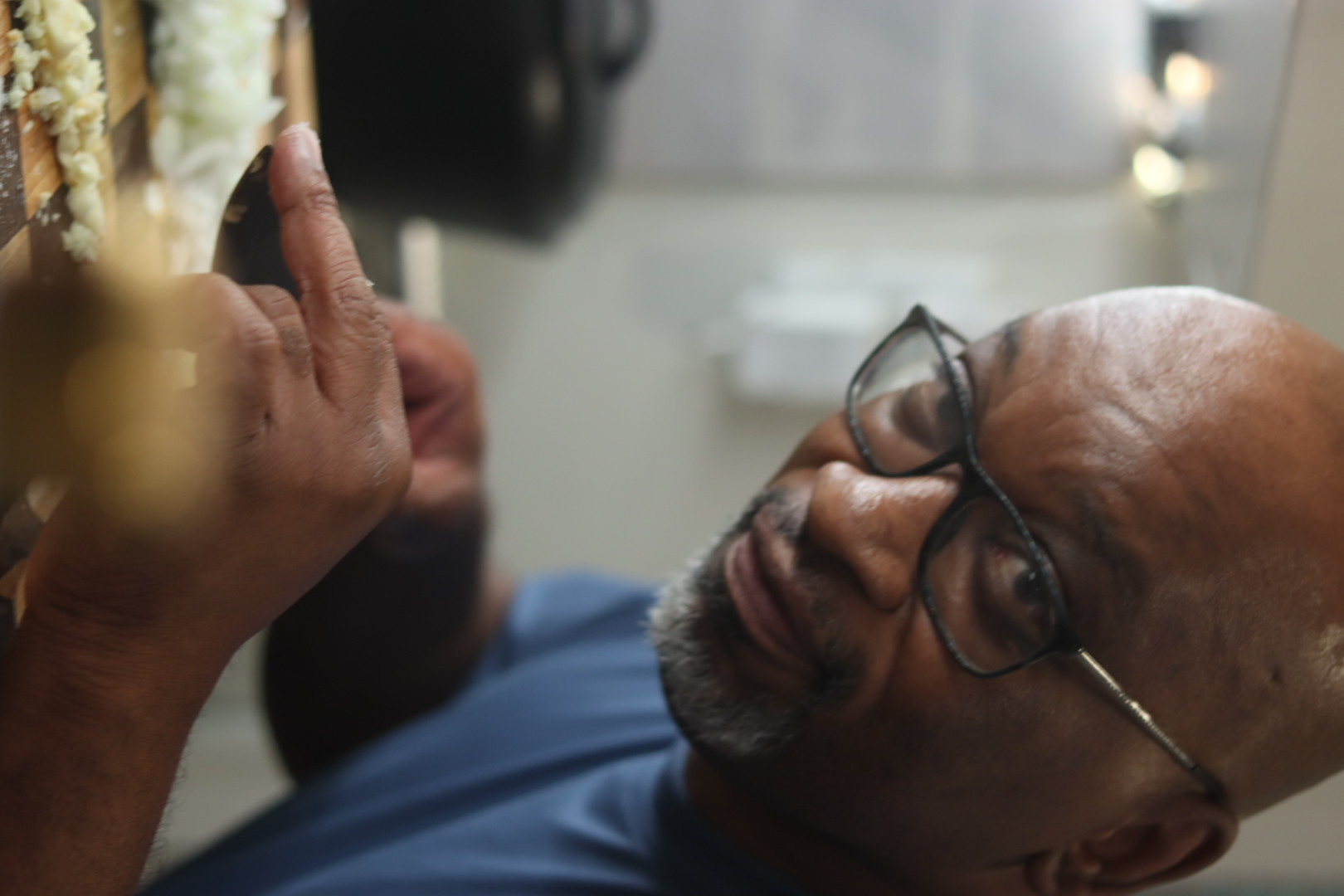
In the detail
Hand work, close to the grain
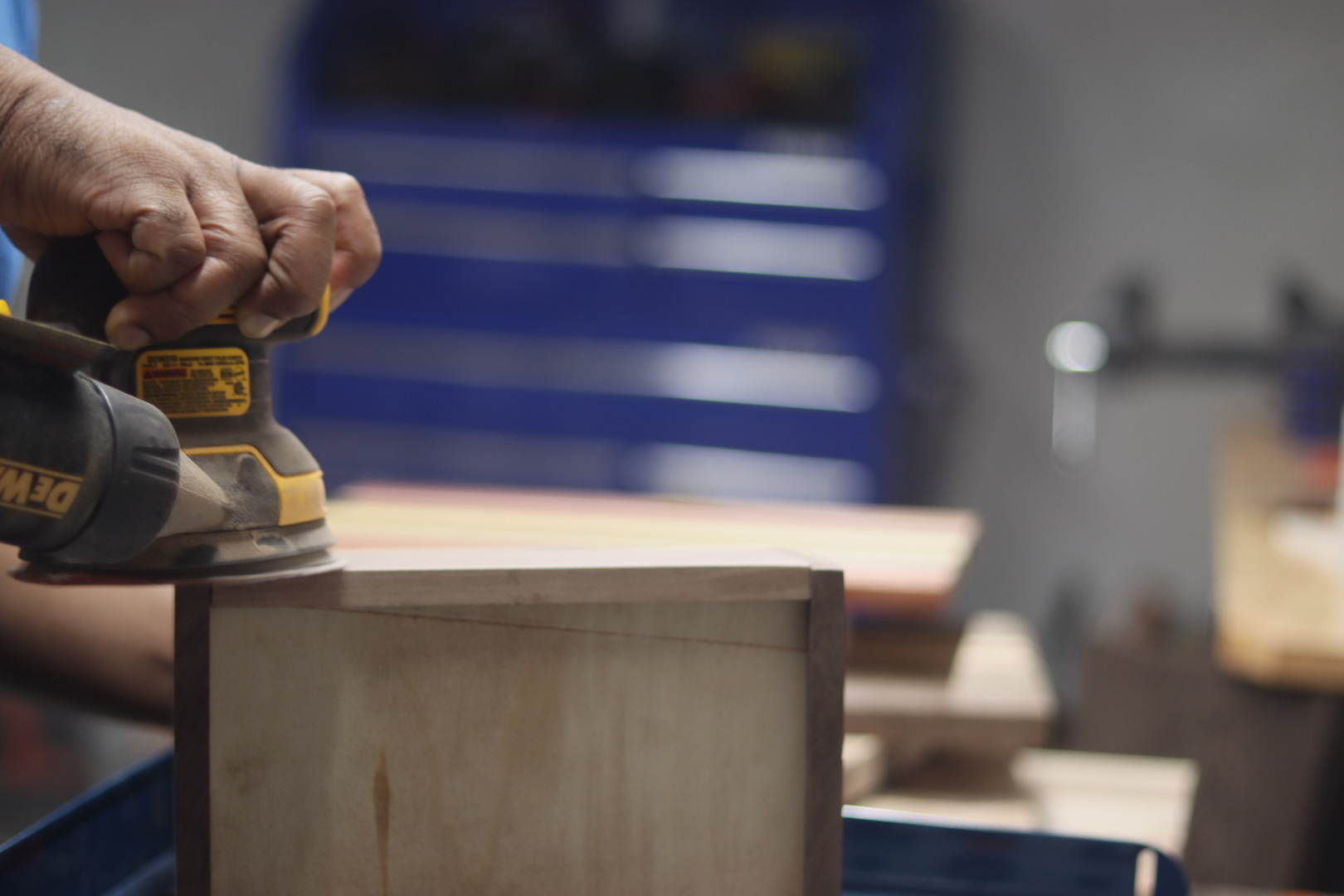
Sanding a box
Smoothing the final surfaces
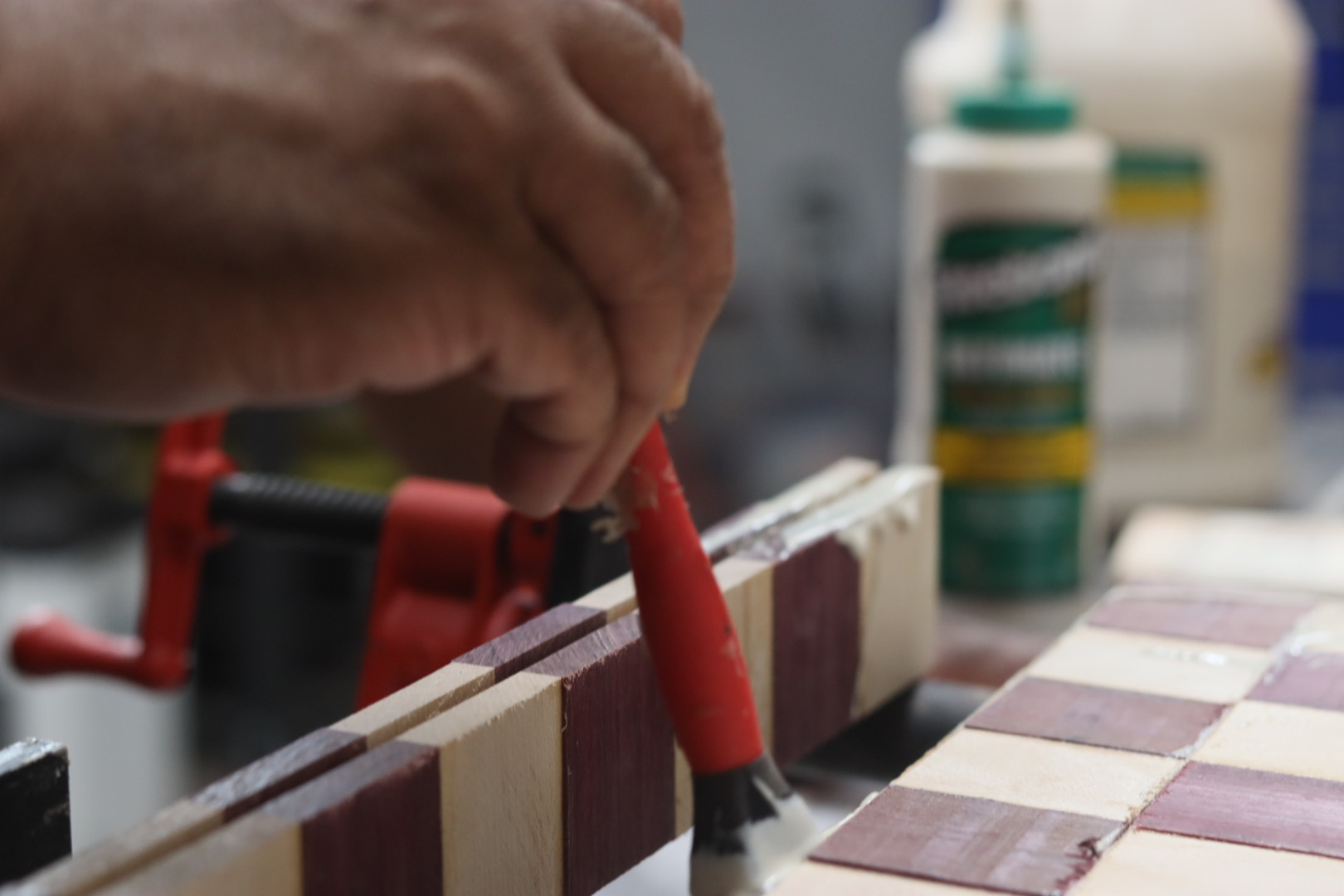
Checkerboard glue-up
Every square placed by hand
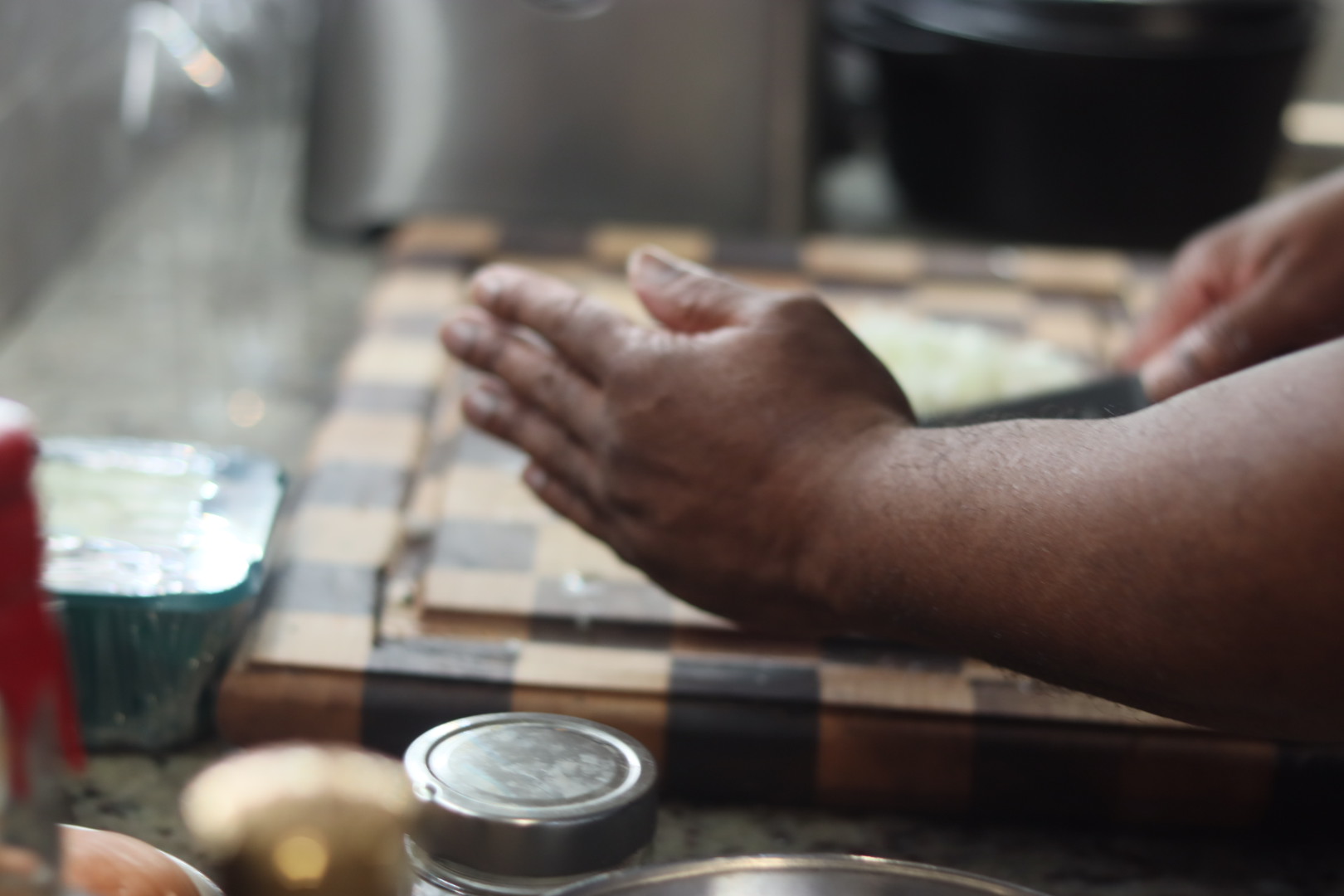
Finishing the board
Oil, wax and patience
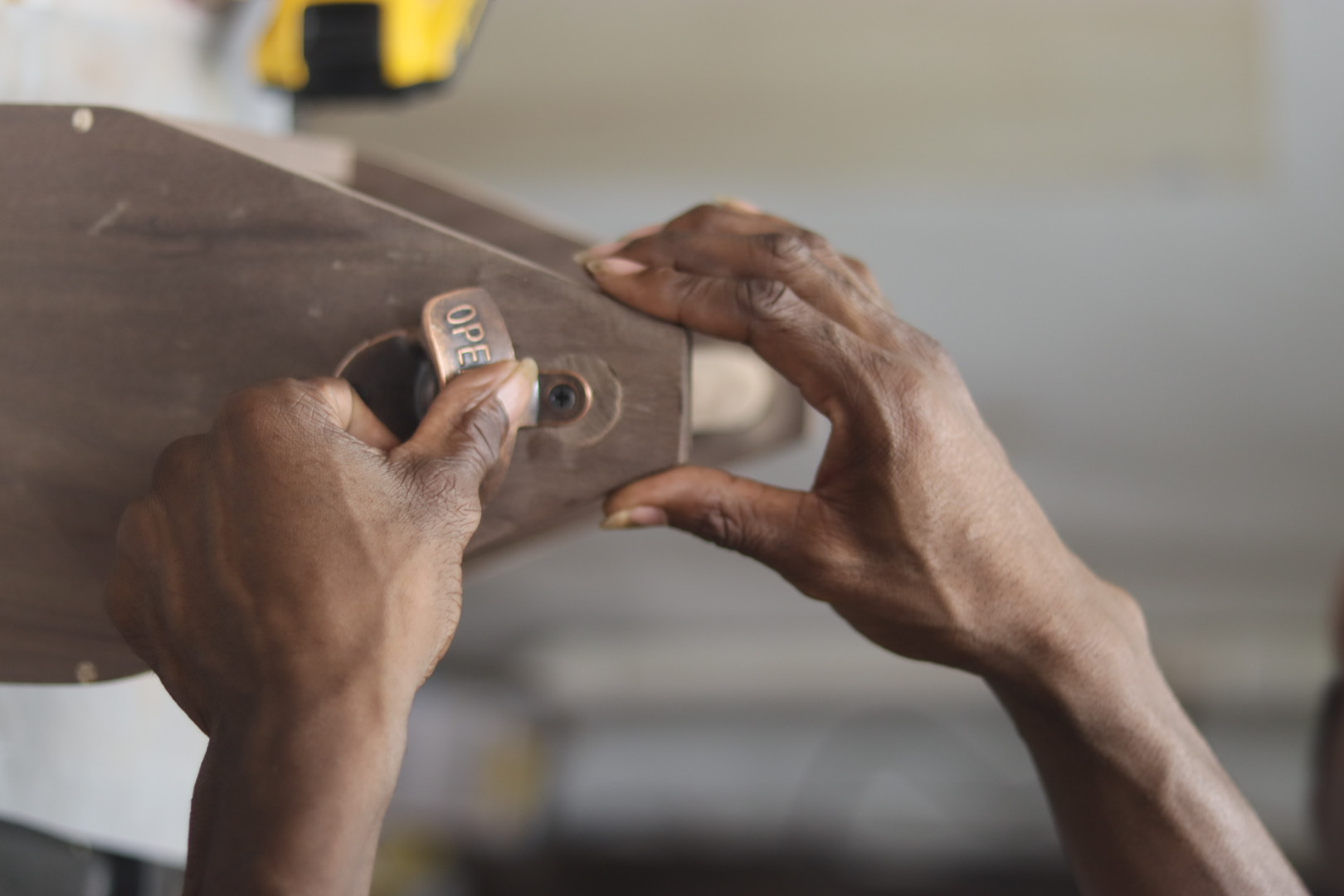
Brass tag
Metal set into wood
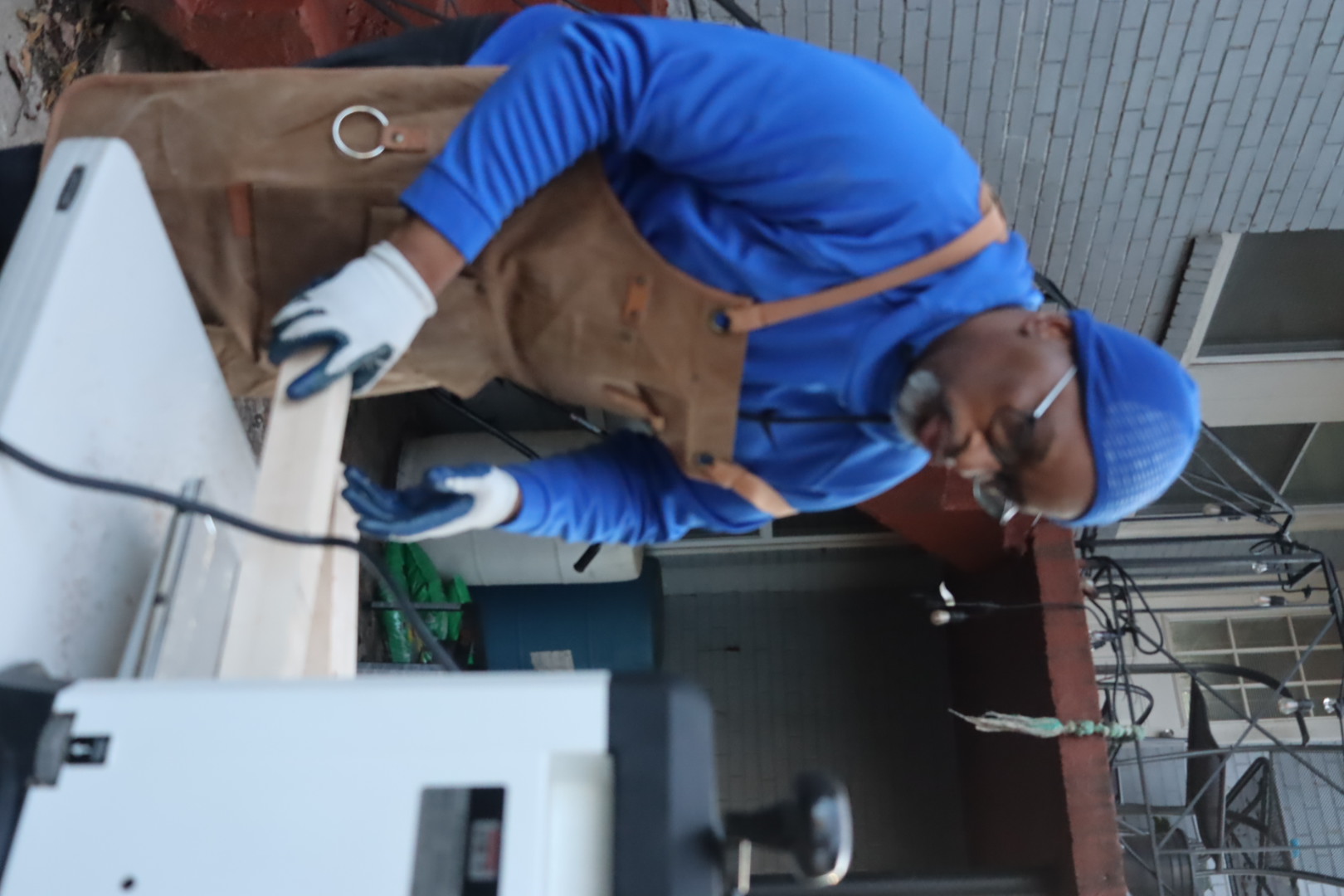
Planing stock
Rough to ready
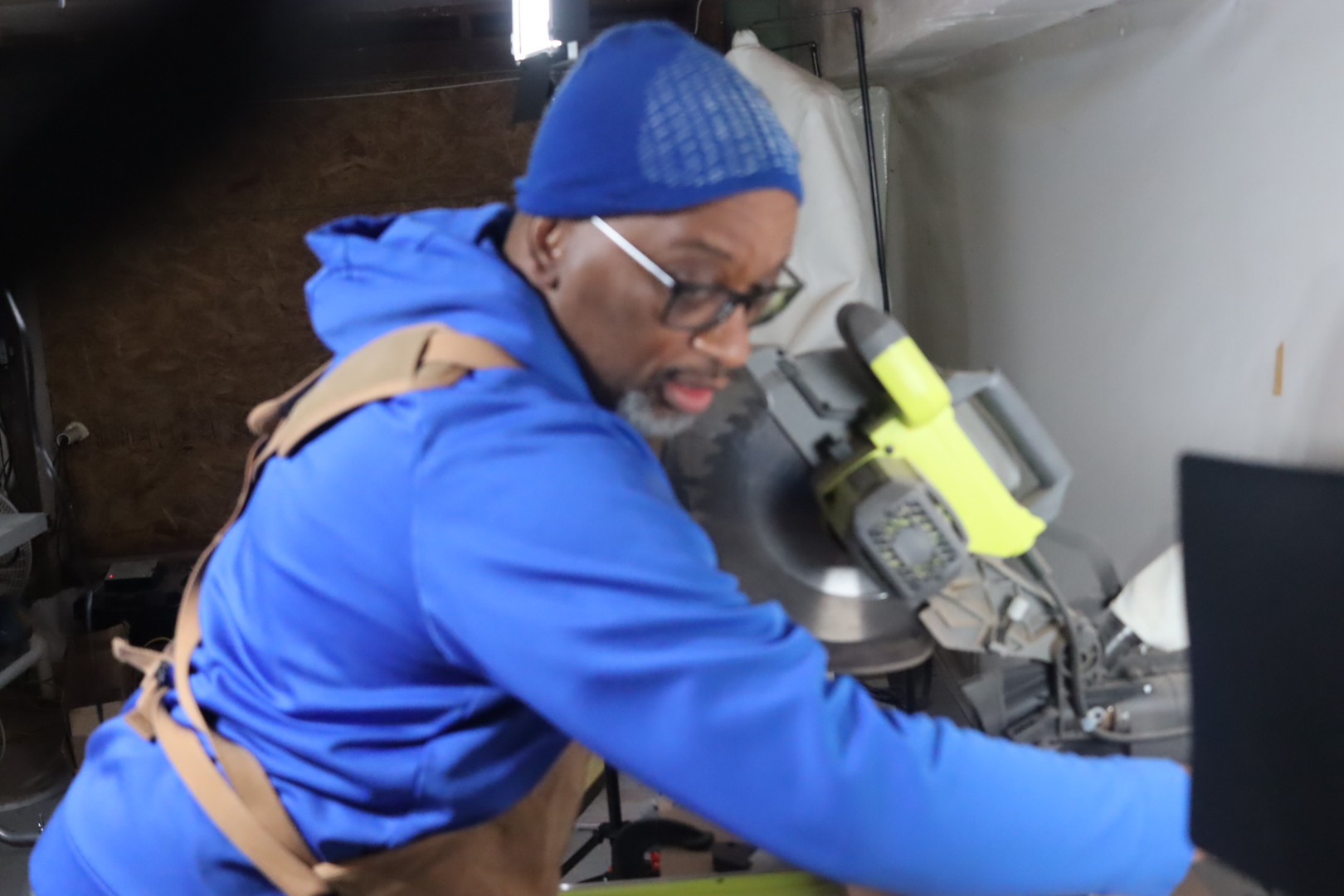
At the miter saw
Cutting to the line
Carl Tyler
Old school artisan
Want a piece built by Carl?
Commissions open a few times a season. Tell us the room, the wood and the deadline, and Carl will cut it the old way — by hand, in Atlanta.