
The little details are the whole point.
Anyone can make the outside of a box look good. We obsess over the inside — the surface only the owner ever sees. Gold leaf, hand-matched veneer, silk, velvet and poured epoxy: details that take hours and announce themselves in a whisper.
The hands that do the work.
Real people, real machines, real sawdust. Every piece passes through these hands in our Atlanta shop before it passes into yours.



What you find when you open it.
Gold leaf
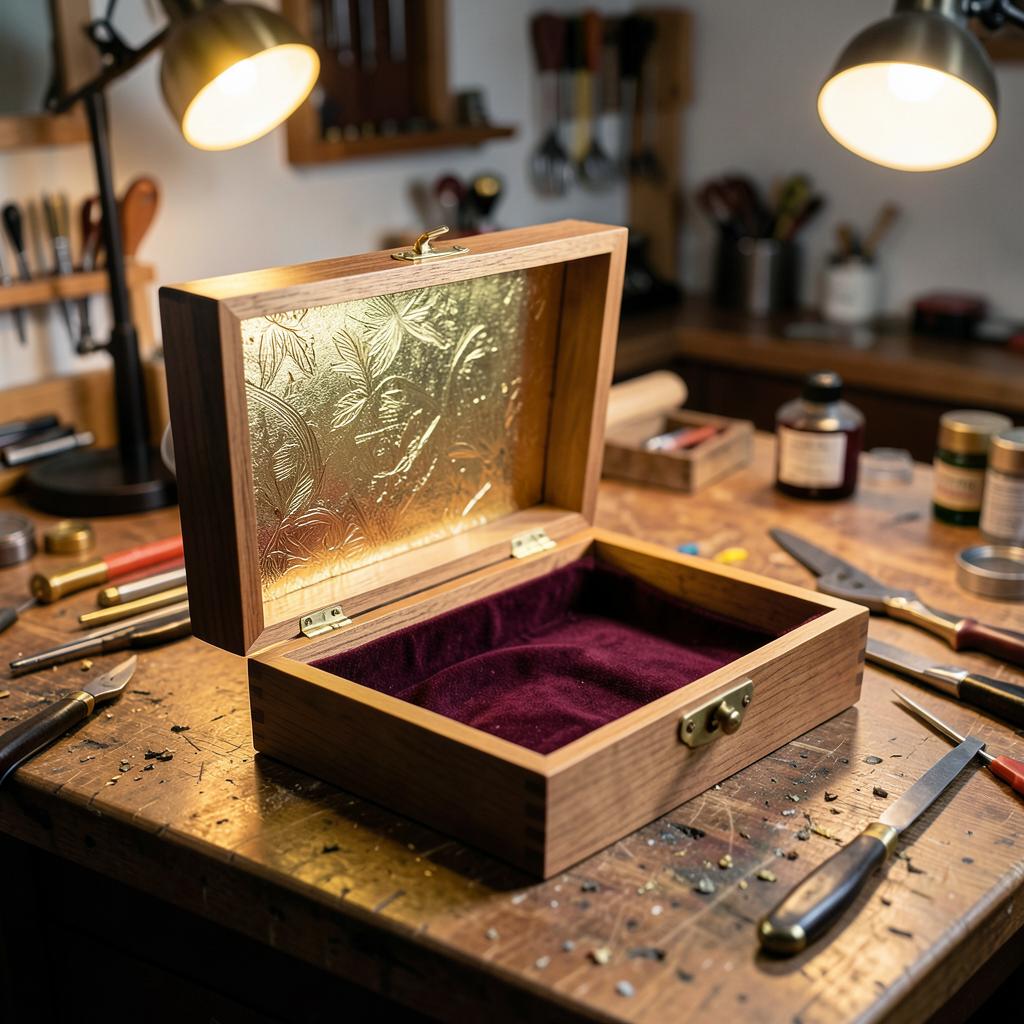
Real gold leaf laid by hand inside lids and trays. It catches the light every time the box opens — a private detail for the person who owns it, not a show for the room.
Exotic veneer
Book-matched sheets of ebony, zebrawood, pommele sapele and birdseye maple line interiors and panels. Matched by eye so the grain flows around a corner like one continuous piece.
Silk & velvet
Cigar boxes, keepsake boxes and trays are bedded in silk or velvet, cut and set by hand over a soft substrate. What you keep inside should rest on something as considered as the box itself.
Epoxy inlay
New school meets old school: pigmented epoxy poured into routed channels — rivers of deep green, smoke black or brass-flecked resin set flush into solid wood and sanded to glass.
The cedar cigar box
- 1
Stock
Spanish cedar chosen for aroma and humidity stability — the traditional lining of any serious humidor.
- 2
Joinery
Hand-cut mitred corners with splines, so the box holds square for decades of opening and closing.
- 3
Interior
The lid receives hand-laid gold leaf; the base is bedded in velvet over a soft substrate, fitted to the millimetre.
- 4
Hardware
Solid brass hinges and clasp, set into mortises so they sit flush and move like a watch.
- 5
Finish
Sanded to 320, sealed with shellac and wax — a finish you feel before you see.
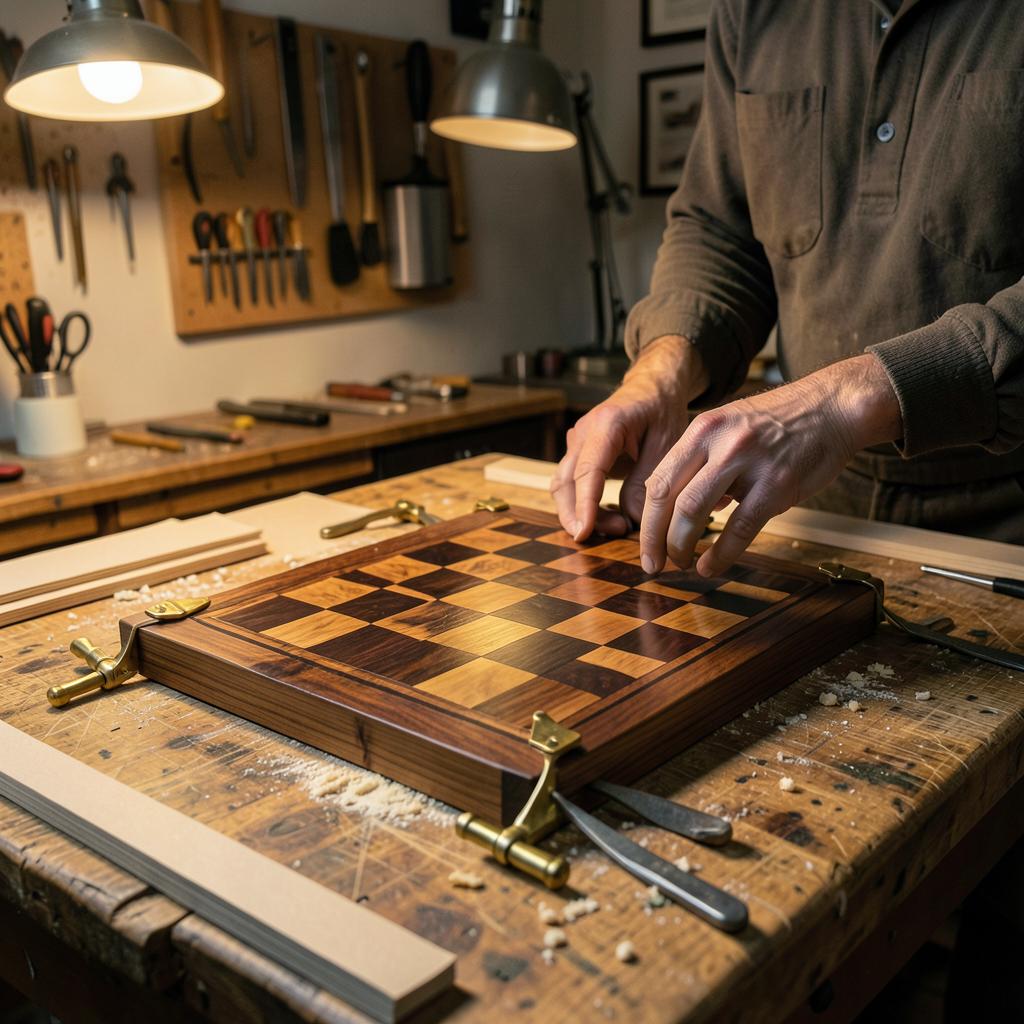
The chessboard
- 1
The squares
Ebony and hard maple cut to identical dimension — sixty-four squares that must agree to a fraction of a millimetre.
- 2
The glue-up
Strips glued, cross-cut, flipped and re-glued to form the field. Clamped flat overnight; a board that rocks is a board that fails.
- 3
The frame
A mitred border with an inlaid brass or ebony stringing line, sized to the squares so the geometry reads clean.
- 4
The surface
Flattened with hand planes, never a belt sander — the squares must stay dead level for pieces to stand true.
- 5
The finish
Hard-wax oil, buffed by hand. Slide a piece across and it should glide, not skate.
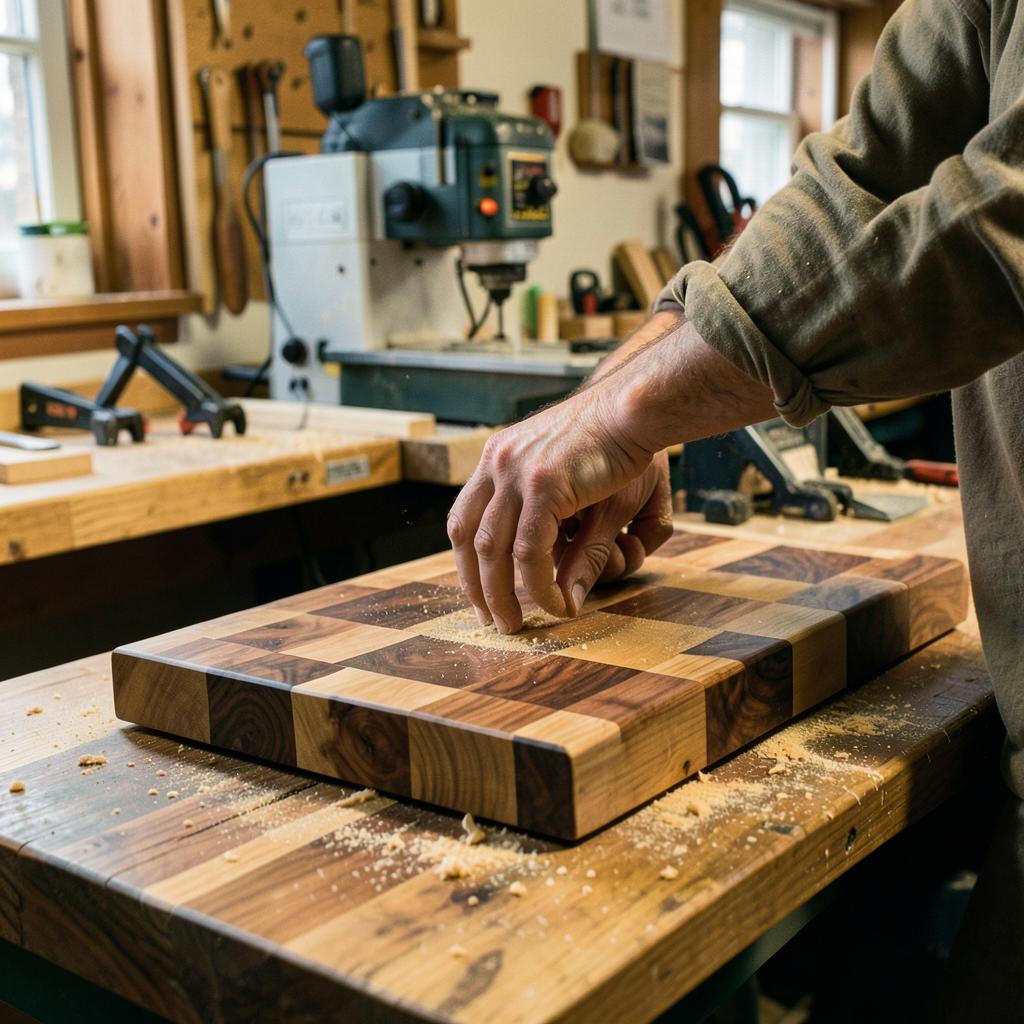
The end-grain cutting board
- 1
Why end grain
The knife edge lands between wood fibres, not across them — kinder to the blade, and the board self-heals with use.
- 2
The pattern
Walnut, cherry and maple blocks arranged by eye. No two boards repeat a pattern; each is a numbered original.
- 3
Two glue-ups
Edge-grain strips first, then cross-cut and re-glued face-up. This is where flatness is won or lost.
- 4
Flattening
Router sled and drum sander bring both faces true, then hours of progressive sanding to 220.
- 5
The finish
Food-safe mineral oil and beeswax, flooded and buffed until the grain drinks no more. Ready for the kitchen that day.
Want one built for you?
Choose your wood, your interior — gold leaf, veneer, silk or velvet — and your finish. We build it by hand in our Atlanta shop.